
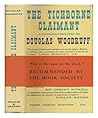
 The Tichborne Claimant: A Victorian Mystery by Douglas Woodruff
The case of the Tichborne claimant was a sprawling legal and media story in the second half of the nineteenth century which tied up the courts, worried the establishment and provided an endless source of gossip, argument and outrage for the whole of Britain for several decades – and even, see Zadie Smith’s novel The Fraud (2023), to this day.
At its heart was the loss, supposedly at sea off South America in 1854, of the young heir to the Tichborne estate and baronetcy in the south of England. His mother, hoping he was still alive, advertised far and wide for news of her son, offering a reward. A man came forward from a village in Australia called Wagga Wagga, claiming to be the lost Roger Tichborne.
From the start, what should have been simple was complicated: the Claimant bore a certain likeness to the lost son but while the son had been slim, this man was huge. And despite having had a good private education, this Roger Tichborne spoke with a Cockney accent and seemed barely literate. But his mother accepted him as her son and his story was believed by many who had known him around the Tichborne estate in Hampshire.

The Claimant
On arriving in England, the Claimant almost immediately made a mysterious trip to East London, the first move in a persistent sub-plot which led to the theory that the Claimant was in fact a butcher called Arthur Orton who had emigrated to Australia from Wapping.
Evidence was gathered, sides were taken – the powerful Tichborne family trying to deny the claim - and the case became so voluminous that whatever you chose to believe, there was more than enough evidence to make an apparently incontrovertible case for it. The only definite fact was that the Claimant either was or was not Roger Tichborne.
The simplicity of that question and the complexity of answering it turned the case into a kind of Rorschach test of social attitudes. Everyone saw something different in it. Were you with the Tichborne family or against them and the Catholic establishment - which the Claimant believed was conspiring against him? Or were you for the downtrodden individual in his fight against an overbearing state, because, strangely, the Claimant’s supporters, whilst believing he was the aristocrat he said he was also saw him as a symbol of the oppressed proletariat?
There were two trials, one civil (on the identity question) and the second criminal (for perjury allegedly committed by the Claimant in the first). Hundreds of witnesses were examined and cross-examined. The speeches and summings-up lasted months and the Claimant’s defending barrister in the second trial brought out an account of the proceedings in no less than nine volumes.
And yet for Douglas Woodruff and others wanting to tell the story, the trials themselves were by no means the end of it. The second trial ended in February 1874, with the Claimant being sentenced to fourteen years in jail. He was released after ten years and lived for another fourteen, during which he toured the country making money by giving speeches about his continuing claim and sometimes, in his desperate need for income, being reduced to little more than a circus exhibit. He married for a second time and had more children and died in penury.
In the years following his sentencing more evidence trickled in and the mysterious Arthur Orton (who, if he could be proved to be a separate person to the Claimant would hugely strengthen the Claimant’s case) was strongly suspected to be a man who was living in an insane asylum in Australia under a different name.

Roger Tichborne (before he disappeared)
Woodruff’s balanced account of all this comes to a weighty but not excessive 450 pages and whilst it would be impossible to tell the story in a linear fashion, he irons out many wrinkles, grouping subjects together without trying to argue a case for one side or the other.
As to where his own sympathies lie, having been immersed in the detail, he ends up more on the side of the Claimant than were the courts. He blames lack of funding of the Claimant’s legal team for their inability to present a stronger case from the evidence that would have been available.
Where the Claimant’s opponents painted a picture of a clever schemer, carefully amassing detail about the man he was pretending to be, Woodruff talks about a man whose “claim bored him and he was not prepared to take very much trouble about it”. Woodruff describes someone who was telling the truth, albeit in a muddled way - because he was “not at all clever, reckless and short-sighted and improvident to a breath-taking degree”.
As a reader of Woodruff’s version of the story, I would be inclined, if pressed to pick a side, to believe the Claimant, for two main reasons. First, while his early letters appear almost illiterate, by the end, he was writing in an educated, well-argued, almost stylish way, completely unlike what one would have expected from someone of Orton’s background. Perhaps he suffered some extraordinary trauma in the years between his disappearance and reappearance as the Claimant - possibly connected with very heavy drinking. Whatever happened in that period changed both his body and his mind in ways which were slowly restored over the years. Those who saw him in jail after its regime of enforced abstinence said they wished the trial could be reheard because now he looked so much more like the pictures of Roger Tichborne.
The Claimant never wavered in his basic story that he was Roger Tichborne. The details were all over the place, but having appeared in Australia with his claim, he never showed any doubt about it, against all the odds. Is it likely that if it was an idea which had simply occurred to him when he was in Wagga Wagga in response to hearing of a reward for the finding of Roger Tichborne, he could have adopted it with such complete life-long assurance? Whoever he was, his claim was as sure as the public response to it was divided.
View all my reviews
Comments
Post a Comment